Tape 200: What Do You Mean, 200???
I’m not quite sure how this happened. If I hadn’t made a habit of sticking a number in the title of every one of these, I doubt I’d even realise that it had. This newsletter stopped being something I actively plan and became an unconscious part of how I organise my time about three years ago now. I started it in January 2021, just as some of the novelty of living through an earth-shattering pandemic was beginning to wear off and the experience of life under lockdown was starting to get, dare I say it, a bit boring. Five years and 200 newsletters later, here we are. The newsletter has roughly the same level of cultural cut-through and significance as it did when it began, but my life has improved quite a bit – I now leave the house, for instance, and don’t shove a stick up my nose or down my throat anywhere near as often.
It feels weird to reflect on 5 years of an ongoing project like this one. It inevitably feels like you have to look at measurable external things, which isn’t what I started doing it for, really. In a world of hustle culture bros crowing “Here’s how I grew my newsletter from 0 to 10,000 subscribers in 6 months!”, the actual facts are fairly brutal. At the time of writing, this newsletter has 926 subscribers, working out at an average of 4.63 new subscribers per email (huh, that actually sounds much better than “Less than 1000 subscribers in 5 years”; I should break statistics down into the smallest possible unit more often). But I’ve always been someone more keen to immerse myself in an ongoing process than to bask in the measurable outcomes of that process, so it feels appropriate that the achievements I have to reflect on here are relatively modest.
This is not to talk myself down! I’m very proud of the audience this newsletter has reached, and whenever I meet someone who tells me how much they love it, I’m really touched. I just find the general obsession with and celebration of growth, numbers and achievements completely baffling, and totally divorced from what I get out of the experience of making stuff. I’m inherently uncomfortable with the idea of occupying the role of “Person patting themself on the back for what they’ve done.” I’m much more comfortable casting myself as “Person who still has more to learn.” The minute you start thinking you know anything, you’re toast. But for some reason, reaching this milestone without reflecting on it in some way feels like a missed opportunity, so I’m going to share five of the biggest lessons that writing this newsletter has taught me, in the hope that it will be useful for anyone else out there,

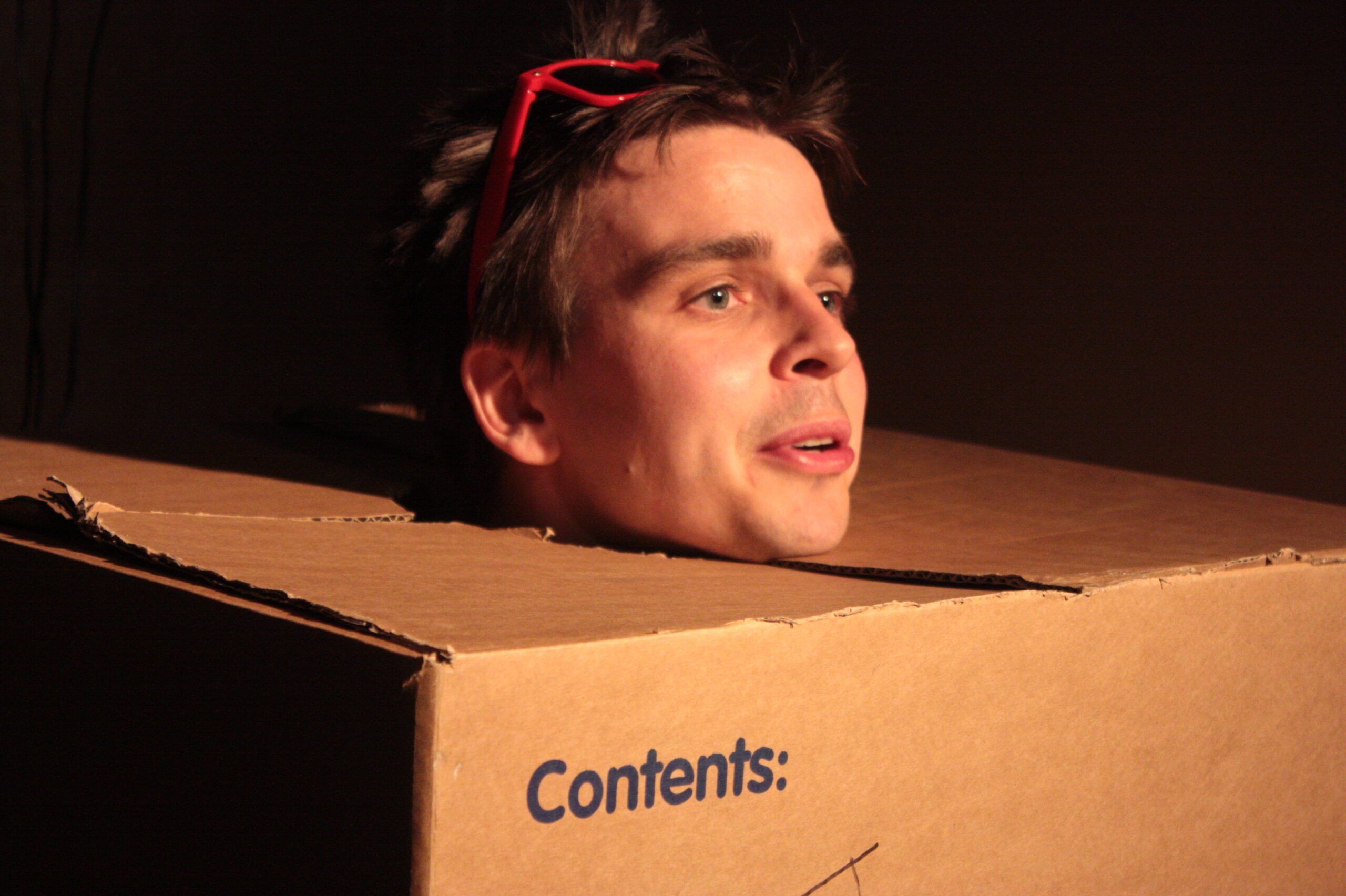
Here is a photo of me looking stupid in the distant past, to illustrate the idea of “time passing.” I still look stupid today, but I have a beard now and I no longer think that wearing sunglasses is inherently funny.
- You Just Have To Show Up
This, honestly, is the big one. I think one of the biggest differences between me pre-pandemic and me now is that these days I’m more diligent and I waste less time, and I think this newsletter was a major training ground for that muscle. Years ago I saw Nick Cave do a hybrid concert/Q&A event at the Barbican. Questions included “What’s your favourite smell?”, “I live in your old house in Brighton – where is the stopcock?” and this excruciating exchange:
Sweet Teenage Boy – “I just got broken up with real bad and I know you’ve dealt with similar things in the past, what should I do?”
Nick Cave – “Are you referring to me losing my son?”
Sweet Teenage Boy – “Oh, err, no, I meant, like…heartbreak with girls and stuff.”
Nick Cave – “Right. Well time just sorts that out, I’m afraid.”
Among his various pearls of wisdom, Cave talked about the fact that the reason he wears a suit all the time is because he has to remind himself that his writing is a job. He said that every morning he puts on his suit, he goes into his studio and he sits at the desk and does a day’s work. And some days nothing good happens and he comes out feeling annoyed about a bad day at work. And other days stuff starts to flow and he comes out feeling really good about it. But he honours that routine and that ritual because he has to remind himself that it’s his job.
I’ve written before about how frustrating I find all the magical thinking that exists around writing and creativity, the attitude that it’s some sort of unknowable, rarefied process rather than just something that requires you to turn up and treat it with diligence and respect. I found Cave’s approach to it really refreshing, despite the fact that in a lot of his writing, he is more guilty than most of talking about creativity as though it were, say, “a sword thrust through the inky surface of a lake by the bony wet hand of God” (I’m guessing, I don’t think is a direct quote).
It may not surprise you to learn that I don’t wear a suit when I write my comedy shows that usually end with me in Y fronts doing a fart. But I do think this newsletter has become part of a similar practice for me as Cave’s suit if for him. I write better and more consistently because once a week (roughly, provided I have time for it) I force myself to sit down and write something. One of the reasons why this newsletter’s growth is so slow might be because I’ve never really settled on one version of what it is. Sometimes I just write an update on what I’ve been doing creatively, sometimes I try to explore an idea I’ve been thinking about, sometimes I just try to be silly. Sometimes it’s a bit funny, sometimes it’s a bit thoughtful, sometimes it’s a bit boring. I try not to tie myself to one version of what I can use it to write, because it’s become a really important part of how I get the ball rolling, and how I structure my creative projects like they’re my job.
On Mondays I sit down and spend an hour trying to write about something. On Thursdays, I revisit it and spend an hour trying to make it better, and then I hit send. Sometimes I wonder if it would be as good being a private rolling document I simply use to kickstart my creativity, rather than a public mailout, but then something about the thought of needing to make it at least vaguely interesting or worthwhile to readers makes me try harder with it, and makes me respect it more. So the act of getting ideas down “on paper” (of a sort) isn’t something I can phone in or second guess, it’s something I have to put some degree of effort into as long as I have the time.
Over the years it’s made me less precious about what might be interesting or fun to write about, and it’s eliminated the fear of making a concerted start on a bigger creative project. It means I never start the week daunted by having to crack into something that feels big and unapproachable. Instead I always start with a simple thing that I can easily bite the head off that makes starting on the bigger projects feel like the logical next thing on a to-do list. Obviously you don’t need to keep a public newsletter to foster the same kind of habits, but I do really recommend keeping some kind of regular writing commitment that you don’t force yourself to feel anxious or self-conscious about that helps you to build the muscle and treat the whole thing like it’s just a job that needs doing.
- Carving Out A Space For What You Want
One of the big reasons why I wanted to start this newsletter in the first place is because, like the rest of society, in 2020 the entire UK comedy industry moved online, and suddenly I found it very hard to find the things that had made me fall in love with it in the first place. Comedy became very easily digestible, very short-form, and very interactive – all perfectly valid things for it to be, but it was hard to find opportunities to explore things in more depth, or examples of other people doing the same. I used to love complicated comedy-dramas that told proper stories, and unique, weird Fringe shows that did things you’d never thought of before. Suddenly all the forms available to you didn’t really give you time to tell a proper story, or people wouldn’t be paying the right sort of attention to allow you to do so; while various algorithms encouraged people to make work as similar as possible to work other people were making in order to be seen.
I really wanted to find a pocket of the internet where I was able to empower myself, and maybe even empower other people, to not give up on the kind of ambitious, thoughtful long-form work that used to thrive pre-pandemic and felt in 2021 like it needed protecting, and I was told newsletters were a way of doing that. It was a way of building an audience that were actually committed to what you were doing, and it was a way to document your process and explore ideas in depth that might unfold over several weeks or months, rather than trying to deliver regular digestible content to a more casually engaged social media following. It remains that – to this day, the times when I see spikes in ticket sales for shows are when I write about them in this newsletter, not when I post about them on social media.
I do think this kind of long-form approach to building a loyal, committed audience continues to be under attack by platforms that increasingly prioritise short-form content. Substack, a platform initially designed to supposedly celebrate long-form writing, now seems hugely dependent on writing short tweet-style “Notes” in order to build and maintain your audience. Everything on the internet that sets out to champion longer, more in-depth ways of thinking and creating seems to eventually rely on the same metrics as everything else. But the conversations I’ve had as a result of writing this newsletter, and the kinds of work I’ve got to do because of it, have made me certain that there is an audience out there that cares about this kind of thing, and is a bit tired of the disposability of short-form content.
One of my goals for this year is to try and explore ways of making high-quality narrative scripted comedy in an online space, because it’s something people want that we largely haven’t quite figured out how to do yet. I think if it weren’t for this newsletter, the idea of trying to fight the tide of what the internet tends to reduce everything to would feel a little hopeless and pointless to me, but I know there are ways to use the internet as a place that empowers ambitious and high-effort models for creativity. People are doing it, I’d like to see more people doing it, and ideally I’d like to be doing more of it myself. This newsletter has helped me hold onto that feeling.
- Long Feedback Loops Are Nourishing
Sort of an extension of the previous point, I guess, but worth caveating – I’m obviously not dismissing social media out of hand, it’s a hugely important part of how people connect with their audiences, and there are loads of people out there using it to make really imaginative, funny stuff. I use it myself to occasionally explore short-form ideas. However, maintaining this newsletter for five years has really helped me compartmentalise my ideas, and develop a better sense of which ones I really care about. Sometimes I’ll even make a sketch that goes vaguely viral. When I do, I invariably feel nothing. Mostly I get annoyed with everyone posting the exact same comment over and over again, even though they can clearly see that someone has already said the same thing, but I manage to withhold the urge to comment “STOP ALL SAYING THE SAME THING” because I don’t wanna yuck anyone else’s yum. I can be proud of the idea itself, and pleased that it’s reached a wide audience, but the ideas that are easy to bash out tend to be the least nourishing, even if they end up seen by many more people. The ideas that I nurture very slowly and deeply might not have anywhere near the same level of reach, but in the process of nurturing them, they change the way I think and feel about stuff. I’m so much prouder of Dog House, with its 2600 views, than I am of this Scrooge parody, with its 300,000 views. This doesn’t mean one is better than the other, but it does mean that one is better for me. The newsletter has acted like a regular way to train that sense of differentiating between ideas as they occur to me, so I can sense immediately which ones are worth sitting with and thinking about, and which ones will benefit from me bashing them out without overthinking them. It’s important to let yourself do both things, and to learn the difference between them.
- Showing Your Work
The biggest thing I miss about the early days of this newsletter is that it used to function much more as a back-and-forth conversation with readers. I would share thoughts on what I was up to or thinking about and people would write back with updates of their own projects or creative practices, and thoughts on how what I’d talked about echoes in what they were making, and so on. I really enjoyed this aspect of it, and benefited from it hugely – I loved seeing how a simple thought I’d had could be reflected back at you from someone I didn’t even know on the other side of the world and end up illuminating what I was initially working on in a completely different way. I don’t know exactly why this conversational aspect of the newsletter has dropped off as it’s grown – perhaps it’s moving platforms. Maybe the way Substack emails show up in your inbox makes them feel less like genuine prompts for conversation. Most likely, I think it traces back to the project’s origins as a lockdown thing. In the depths of lockdown, an intermittent conversation with someone you don’t really know in which you hold one another accountable in your creative projects was a valuable thing worth carving out time for, and these days we’re all so busy that it stands to reason people have less time to engage directly on a regular basis.
Still, while my experience of the newsletter feels more one-way than it used to when it started out, I do keep meeting people who remind me of the value of just showing people what you’re up to. Just when the newsletter starts to feel like a weird, slightly narcissistic broadcast I’m in thrall to and question whether I should keep doing it, I’ll meet someone at a gig who tells me it’s their favourite place to read about someone documenting their process, or something like that. The ripples it sends out into the world will bounce back to me in the most unexpected places, and I’m always really touched by it. It reminds me how little I knew about how to actually go about making comedy when I started out. I don’t think newsletters were much of a thing yet, podcasts weren’t quite so ubiquitous, collaborating with directors and the like was basically unheard of. I learned how to make shows simply by watching shows and then attempting to make my own. I learned to write scripts by watching films and TV shows and then attempting to write my own. There was a lot of trial and error, and I made lots of mistakes and did things I’d do very differently now. But the comedy world is so much better at encouraging people to share what they know these days, and document what they’re doing, and I see it helping other people in lots of small ways, just as it helps me every time I see someone else doing it.
If you’re in the process of making stuff and sometimes consider putting out some sort of document of what you’re doing – a blog, a video, even just a few pictures on social media to give an insight into what you’re making and how you go about it – and you second guess yourself and wonder what the point of it would be, just do it. You have no idea who might be out there struggling to know how to get started and worried about making a mistake who might feel inspired by seeing how you’re going about it. Show your work!
- What You Communicate Changes What You Are
A few years ago, I stopped making shows where I just tried to be stupid for the hell of it and started trying to make shows that used stupidity as a means to express things I felt very deeply. I did this because I felt that there was a big part of myself that wasn’t really being expressed in my work, and that was having the effect of making my work feel less sincere or authentic than I wanted it to. At the end of the day, I’m someone who thinks way too deeply and too seriously about really stupid things that don’t matter very much. That’s who I am, but I don’t know if I really understood it in my early shows. But with the Mr Fruit Salad show, I started giving myself permission to try and reflect that in the things I make a bit more. When this year’s show got such a lovely reaction from people, one really nice write-up included a comment along the lines of “Joz Norris’s shows have always been playful and fun, but what’s really surprising is the level of craft and emotional depth on display here” or something like that (I haven’t memorised it, I’m not a psychopath, and I’m not going to look it up now, I can do without deliberately feeding my ego).
This was a reviewer who had seen all my shows since the point when I started trying to be more thoughtful and philosophical in my work, and to put more effort into that side of myself. I found it quite funny that the thing I thought I’d been doing consistently for the last six years only really manifested in ways that some other people could notice it last year. I think this newsletter is a big part of that. I think sometimes, if there’s a part of yourself that’s struggling to show up for your work, you have to create a space where you can allow that part to show up, and give it time. I had to practice thinking more earnestly about what I was doing, and trying not to make fun of myself for my impulse to over-analyse or over-think, but just to allow it to happen and to get comfortable with it, because it’s something my brain does anyway that I needed to learn to be less self-conscious about.
If there are things you’re hiding back and not communicating, then there are going to be empty spaces in the work you make, places where the audience can sense that you’re not being really honest with yourself. I think the early shows I made where I was just trying to be silly felt a little inauthentic, and I think the shows I made from 2019 to 2024 were big steps forward but involved me gradually getting comfortable with bits of myself that I hadn’t yet fully integrated into what I was doing. I think last year I finally cracked it.
So there we have it – five big lessons I’ve taken from writing this newsletter for five really enjoyable years. They’re not the only five lessons, they might not even be the biggest five lessons, but they’re the ones that sprang to mind today and like I said, this newsletter is an ongoing process, not a product in its own right. Perhaps in five more years I’ll be able to think back on five more! (I mean, you’d hope. Imagine if five entire years pass and I learn nothing). Thank you so much to everyone who’s read and replied and engaged at any point, you’ve all been such an inspiration and have been a really big part of helping me to get better at making stuff. I hope all of these brain-splurges have been useful to you too. I’d love to hear about what you’re all up to and what you’re all making!
A Quick Plug – The tour officially kicked off in Leeds on Wednesday and it was such a great show to start with! Thank you so much to everyone who came. The next couple of dates are Oxford tonight and Norwich on the 31st of Jan, then there’s a bit of a break before it resumes in March. Come along to either of those dates if you’re free!
A Cool New Thing In Comedy – British Comedy Guide have announced their 2025 award nominees and there’s a bunch of amazing radio and TV shows in the running. If you’re a comedy fan, make sure you vote!
What’s Made Me Laugh The Most – Holly Burn at ACMS on Monday, having a go at the audience for being losers and then chucking the mic stand around.
Book Of The Week – I’m reading Treasure Island. Why? Not sure. Watched Muppet Treasure Island over Christmas, then found Treasure Island in a bookshop for 50p and couldn’t remember if I’d ever actually read it. It rips along! Twenty pages in and there’s already two dead pirates. Twenty pages later and we’ve already met and then been betrayed by Long John Silver. Robert Louis Stevenson doesn’t fuck around!
Album Of The Week – Let It Be by the Beatles. I’ve been trying to fill the gaps I’d left in the Beatles’ discography, and I think I might stop doing that now. The only gaps remaining are albums I’m pretty sure are not well regarded, and Let It Be was the only one left that’s supposed to be any good. It’s alright, I guess? “Let It Be” and “Get Back” are classics, but we already knew that. Everything else here is kind of fine? I prefer Bowie’s version of “Across The Universe,” is that sacrilege or is that an acceptable opinion?
Film Of The Week – Not seen any! Been busy, tour and stuff. Looking forward to Hamnet and Rental Family when I get back (hey, I just said “Get Back,” like the Beatles song I was just talking about! That’s crazy).
That’s all for this week! Let me know what you think, and if you enjoyed the newsletter, feel free to send it to a friend or encourage others to subscribe. Take care of yourselves until next time,
Joz xx
PS If you enjoyed this and wanted to make a one-off donation to my Ko-Fi account, that would be very nice and cool.
PPS Went to see the Wes Anderson exhibition at the Design Museum, look at this cool model of a hotel from his famous movie:
