Tape 220: The Decline Of TV Comedy And The Rise Of Main Character Syndrome
This Sopranos meme did the rounds on a lot of comedy writing/directing Whatsapp threads a couple of weeks ago, as Channel 4 announced that they would be combining their comedy and drama departments as part of a drive to cut 25% of their workforce:

Now, I don’t really want this newsletter to become a place where I partake in the generally pessimistic mood that surrounds the work of scripted comedy for TV at the moment. I work quite hard to maintain the belief that it is still possible to make good stuff, and I don’t want to let an organisation’s very sad financial woes affect the way I feel about what I do. It’s become increasingly clear over the last few years that building a career in comedy is no longer about making the necessary speculative materials to persuade gatekeepers and decision-makers to give you work, because those gatekeepers and decision-makers are now mostly trying very hard to stay afloat themselves. It’s now a case of making the work you want to make however you can, then finding ways to take that to your audience, and letting that transaction generate opportunities. So it no longer holds much sway over my emotions that TV comedy is struggling in the way that it is, though it’s undeniably very sad.
Generally, the dire situation that TV comedy finds itself in in this country at the moment is blamed on uncontrollable externals – shifting sands, people’s attention moving elsewhere, the rise of online, the change in the way people consume media, etc etc. By and large, the way TV has been trying to combat this sea change is to make itself more like online media, or to use people already popular online to prop up their business model by borrowing their audience. Undeniable hit shows like The Traitors generate endless speculation about how they possibly managed to get Gen Z to sit down and watch it, with talk of memes, influencers and TikTok deals, with very little of this faintly panicked discourse focusing on what I would argue was the main reason it’s been so successful – it’s very good.
The preference for the industry to obsess over chasing online trends and influencers over a focus on making high-quality work is one of many things that, in my opinion, have hastened its decline. Note that this is not me saying that The Traitors is the only good TV show being made, that would be mad! (Sort Your Life Out also exists, for a start). Nor do I think that if a show doesn’t become a huge ratings smash, it must therefore be because it wasn’t good enough. Those shifting sands are real, and they are a factor, and a lot of excellent comedy shows are being overlooked unfairly. But I also think that a lot of factors that used to underpin good scripted comedy are being ignored and deprioritised in the rush to learn lessons from the online space, and it’s affecting the quality of our comedy output.
I’m not going to rake over everything that I think has gone wrong, because like I say, I don’t really care for unnecessary negativity. I actually feel weirdly positive about the whole thing because, as I say, the decline of the traditional TV model for scripted comedy puts much more power back into the hands of writers, performers, comedians and creators. The job becomes working out what mode of output is the best fit for your voice, rather than working out what version of your voice is closest to what a small handful of people are looking for, and that’s inherently a more empowering and exciting problem to solve.
But I do want to talk a bit about one particular issue which I think has contributed to all this and originates not in the world of comedy writing but somewhere much wider. I want to talk about the rise of main character syndrome.
When I was about fifteen, some friends of mine who happened to own a video camera decided they were going to make a mockumentary about our friend for his birthday. The mockumentary was a career retrospective set after his death which remembered him as one of the most pioneering ska musicians of all time, with all of us playing his friends, enemies, mentors, bandmates, managers and lovers in a series of talking heads. It was really stupid, but it was an early testing ground for learning a lot of really crucial skills for comedy writing. We all turned up with our own idea of how we were going to be funny, and seeing what other people were doing in their segments made us want to up our game, or rethink what we were doing, or look for opportunities to combine different funny viewpoints, or find clashing perspectives that would reflect each other in funny ways in the edit.
At that time, if you wanted to make something funny, this was pretty much the only way to do it. Somebody needed to hold the camera, and because we were all fifteen and didn’t know any camera operators (would’ve been weird if we did, to be honest), that meant we needed to rotate who was filming to keep it fair, and make something collaborative where everybody had a chance to be funny. This also happened to coincide with something of a golden age for UK comedy on TV – I grew up watching things like The Office, Peep Show, I’m Alan Partridge, Nighty Night, The Mighty Boosh, Garth Marenghi’s Darkplace, Smack The Pony – shows that were amazing at presenting ensembles of idiots whose viewpoints and perspectives would clash against one another in ways that were precisely collaborated to be really funny. Shows where every line was funny, not necessarily because it would read like an obvious gag on the page, but because of who was saying it and what we knew about them and how the thing they were saying either confirmed or undermined their POV.
I remember how radical Marion & Geoff felt when it came out. Here was a narrative sitcom with one character who narrated the entire story to us directly down the lens of the camera. There were gaps in the narrative that Keith Barrett, Rob Brydon’s character, was unable to see, through which the audience could clearly see the actual story of how and why his marriage fell apart. Keith’s self-constructed version of events that missed the obvious truth became the driving force behind all of the show’s comedy and all of its tragedy. It absolutely blew my mind. These days, I imagine it must be difficult for someone who’s not seen Marion & Geoff before to understand how radical it felt at the time, because so much comedy now functions through a single POV, for better and worse.
These days, if someone wants to try and make something funny, they can very easily film it by themselves on their phone, post it to social media and get immediate feedback validating the fact that their perspective is funny and unique. When I first fell in love with comedy and started trying to learn how it works, what I was shown was that being funny was a case of working out how you fit into a wider ensemble and how that ensemble’s dynamics shift and change around you. Someone learning about comedy in the age of social media would mostly be being shown the idea that being funny is about presenting events and ideas through your own specific comedic viewpoint. Neither approach is wrong, and both have produced amazing comedians making really impressive bodies of work. But I do worry that, in trying very hard to mimic the form of what works online, the TV industry has allowed itself to shed a lot of important skillsets and fundamentals that underpin really good scripted comedy.
Every comedian has to believe, at least to some extent, that their perspective on the world is uniquely funny and interesting. That specificity of viewpoint is part of what makes the best comedians funny. But I believe the best scripted comedy understands that this is a self-created myth, that in fact everyone thinks their perspective on the world is funny and interesting, and the way to make something really compelling is to work out how those different perspectives can be undermined, questioned and defeated by being put in conversation with various other people who believe the same about themselves. This even holds true for shows that were less ensemble-led but had a very clear main character like I’m Alan Partridge – part of what makes Alan funny is that the only person in his life who will actually listen to his stories and be impressed by him is an idiot who works in a petrol station, and because his delusional self-importance is propped up solely by the tireless effort of a meek woman with no self-esteem who he unwittingly tramples all over with everything he does. The other characters make him funny.
So even when there is a main character, comedy works best when everyone feels like they have enough interiority and enough of their own perspective to be the main character. Nobody should be treated like they’re the most interesting person in the room.
I feel like recently, however, there’s been a rise in comedy shows where a central character whose perspective on the world is uniquely off-kilter and odd spreads chaos wherever they go, with most of the other characters being fairly reactive archetypes who must tolerate their chaotic behaviour. Of course, there are still plenty of examples of recent shows that break this trend and have generous, funny, alive-feeling ensembles – Daddy Issues, Such Brave Girls and Big Boys are great examples, and ensemble masterpieces like Stath Lets Flats and Ghosts weren’t that long ago. And I don’t want to go all “Old Man Yells At Cloud” and let this become an inane “Comedy’s not as good as it was in my day!” rant, because that’s simply not true. The comedy scene in this country is thriving. I see it at the Edinburgh Fringe, I see it in theatres up and down the country, I see it in the independent films and pilots people are making at film nights like mine and Miranda’s Eggbox and others like it. People are making comedy with such imagination and heart and invention and spark. But due to funding issues and, in my opinion, a misplaced desire to mimic the structures that underpin online comedy, not enough of that talent is finding its way to a wider audience via the traditional mediums whose purpose used to be to lift up and elevate the best work in the country.
And I worry about what the wider impact of that will be on people growing up looking for a creative outlet, and the knock-on effects on the state of the comedy industry if it doesn’t attract those people. When I first started watching comedy on TV, I was a very shy, insular kid with few friends who really struggled making connections with people. When I started watching Partridge and Boosh and Marenghi and Peep Show, and saw all these hilarious characters doing ridiculous things, it made me think – “I want to be funny.” I wanted to make connections with people by working out who I could be when I tried to be funny, and giving more of a voice to that guy. All these shows felt like they were saying:
Look at how funny everyone is.
Like there was a version of everyone where everything that made them stupid, or cowardly, or deluded, or pathetic, could be turned on its head and become something to celebrate about them, something that made them just like everybody else. Comedy felt like a tool that revealed the fundamental human-ness of everybody, under all our ridiculous invented selves.
But when we try very hard to make expensive scripted comedy shows that squeeze all their comedic ideas through a single POV, we run the risk of making it so that the show is instead saying:
Look at how funny this person is.
As though these central characters are slightly removed from the people around them, and therefore more deserving of our attention and interest. That’s a much more exclusionary contract with the audience. It’s a way of putting a barrier up between the person being funny and the person watching it. Whereas my favourite comedies growing up used to present the human experience refracted through an array of different lenses (are you Mark or Jeremy? Or are you Super Hans? Or maybe you’re Johnson, or Sophie, or Dobby, or Big Sooz?), many more recent shows seem to invite the viewer to either identify as the funny main character of their own life, or as the boring normie side character. And who wants to be the side character of their own life? (Answer – me, I would love this, God, imagine how much less pressure you’d feel day to day if you knew you were the side character and people weren’t really following your arc, it would be so liberating.)
So the art we’re making is encouraging its viewers to think of themselves as fundamentally separate from, or even better/more interesting than, their communities, rather than to think about what’s funny and human about the way they interact with their communities.
Ultimately, I’m not really writing about any of this this week because I particularly want to make a finger-wagging point about TV comedy (he says, after banging on about it for ages). I recognise how hard everyone who works in it is working to try and ensure its survival, and I recognise how hard it is to do that in such a hostile landscape where all the money and attention is shifting elsewhere. But really, all this talking about TV comedy is a way of making a wider point which I think is much more important. I think the way this has played out in the comedy world is emblematic of a much wider and more troubling change:
Social media has created an environment where we have been manipulated into thinking as individuals rather than as communities.
Everything we see comes filtered through the specifics of our own curated algorithm, and so everything we see reinforces our sense that we are unique and that our experience of the world is not something we share with others. In allowing ourselves to be manipulated like this, we risk losing entire skillsets that used to be crucial to the making of good art that would actually inspire people. I honestly don’t know what my life would be like if I hadn’t stumbled across a bunch of shows that made me laugh and made me wonder and cracked my heart open and gave me the confidence to actually try and connect with people. I hope we don’t lose that entirely, because comedy is something this country is really good at that achieves that effect really well.
In an age of mass algorithmic manipulation, there’s a tendency for people to put a lot of weight behind the idea of “thinking for yourself.” To question what’s put in front of you, question the reasons it’s being shown to you, to think “for yourself.” All of that is important, and necessary. We do need to think more about what we’re being shown and why, and fight more to isolate the voice that tells us what we actually like, separate from what all the tech companies vying for our attention tell us we should like. But I think we should be wary of taking that mentality to its extreme. We shouldn’t think just for ourselfves. We should think with our communities. We should think with our friends, think with our families. We shouldn’t lose touch with the skills and ideas that can develop when you get together with a group of people and try to build something special with them.
So go and make things with your friends. Take turns to hold the camera, so everybody gets a go. Not everyone can be The Funny One. Except actually, maybe they can, and maybe that’s the point of the whole endeavour.
A Quick Plug – All I want for Christmas is Hugh! After sold out work-in-progress runs at the Edinburgh Fringe and Soho Theatre this summer, and in advance of its full launch next year, Joz Norris IS Hugh Jackman IS The Phantom Of The Opera is coming to the Pleasance in Islington for 3 nights this Christmas! It’s the show that’s got people saying things like “That was one of the most incredible things I’ve ever seen in my life” and “You need to go to the gym more, you do not look like Hugh Jackman.” It’s the perfect deranged night out for you and everyone you know this festive season, so why not come and get involved?
A Cool New Thing In Comedy – Colin From Accounts is back for a third and final series, and my goodness it remains one of my favourite shows of the last few years. It breaks my heart so much, and yet it never once forgets its responsibility to be incredibly funny. This is another great example of a show where every single character feels rich enough that they could be the lead, I highly recommend it if you’ve not seen it.
What’s Made Me Laugh The Most – There’s a scene in Practical Magic 2 where Lee Pace takes Sandra Bullock to a traditional English pub and introduces her to pie and custard then tries to romance her by saying “I like this…my molecules close to your molecules,” and I don’t know if it was supposed to be funny, but it really, really was.
Book Of The Week – Murder At Gulls Nest by Jess Kidd. My whodunnit research continues apace, coming bang up to date to see what people are reading in the genre nowadays. This is a really fun cosy crime novel from last year about a former nun who becomes an amateur detective and investigates a murder at a boarding house in a seaside town in the 1950s. Cosy crime is great, I can’t believe I didn’t get into it sooner.
Album Of The Week – Second Song by Neil Young and the Chrome Hearts, which has been loudly trumpeted as his “best in years,” although as someone who has continued wearily listening to everything Neil Young has released over the last decade or so, that’s really not a difficult bar to cross. But two of the songs on this are quite good, admittedly. I doubt many people will be chucking their copies of Harvest into the bin to make way for it, but hey, at least those two songs are very long.
Film Of The Week – Practical Magic 2, which apparently everyone hates but I thought it was alright. It’s very stupid and nobody needed it to be 2 hours and 10 minutes long, but it’s kind of fun. There’s a bit where the characters go to Merry England and go to a completely empty pub after closing time, where the landlady says “This pub is the local gossip centre. We’ll know where your daughter is by morning,” which felt a lot like someone had done enough research to know that pubs are local gossip centres in England, but not enough to work out where the gossip was going to come from in between closing time and the morning. Brilliant stuff.
That’s all for this week! If you felt like sending this newsletter to a friend or giving it a share I’d hugely appreciate it. Take care of yourselves until next time,
Joz xx
PS Feel free to send me a tip on Ko-Fi if you enjoy my work and would like to support me to keep making it!
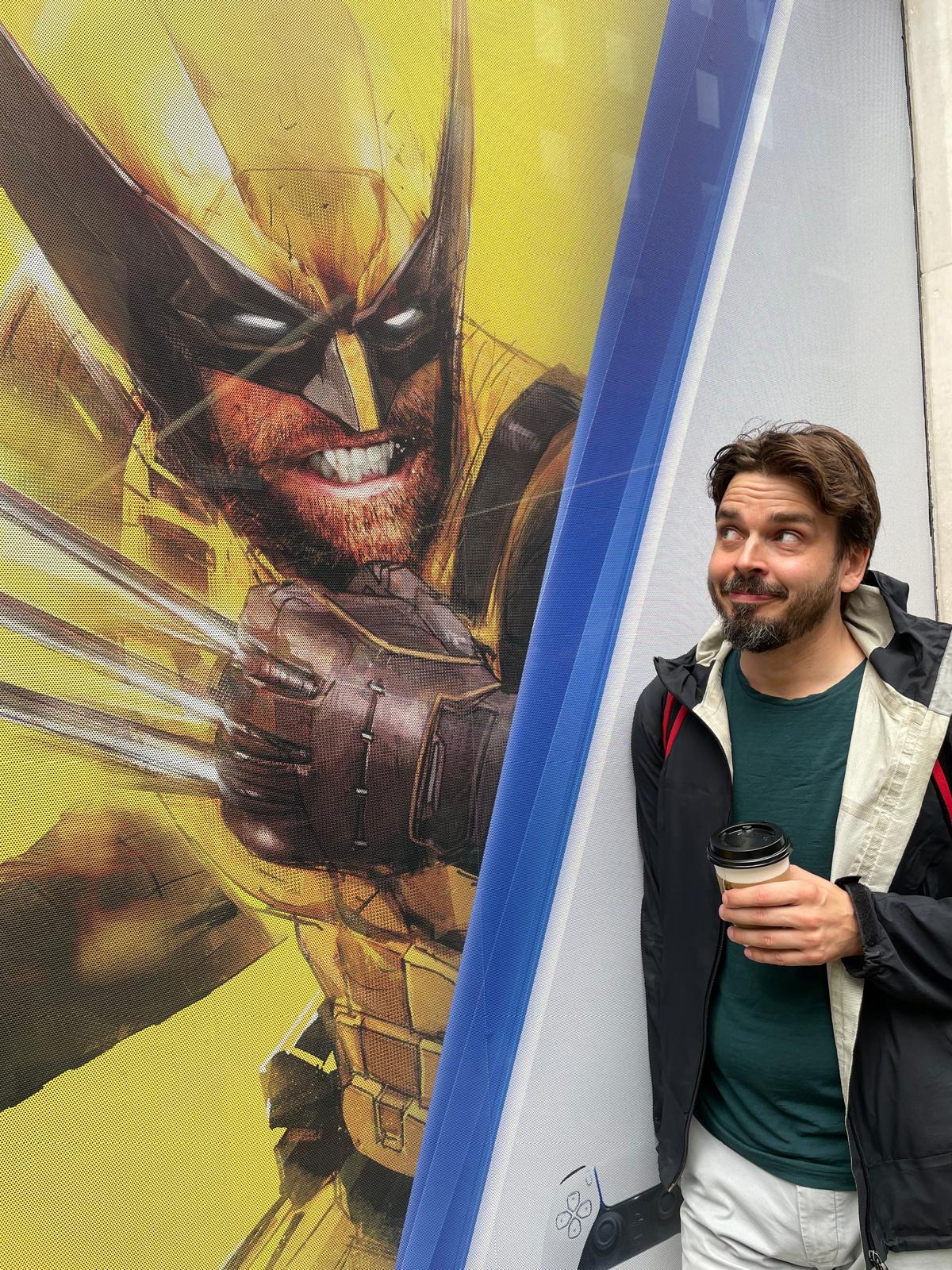
PPS It’s so nice that the cultural zeitgeist is doing such a great job of promoting my show for me at the moment:
